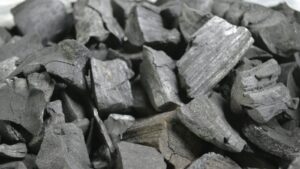
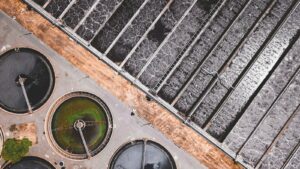
Reverse osmosis (RO) membranes are the most expensive part of most water purification and desalination systems, and they are easily damaged. An activated carbon filter in front of the RO is one of the simplest ways to protect them. This guide explains why, where the carbon goes and how to choose and run it.
Why RO membranes need protecting
Most RO plants use thin-film composite polyamide membranes. They give excellent salt rejection but have two weak points:
- Chlorine damage: free chlorine and other oxidants attack the polyamide layer. The damage is permanent and shows up as falling salt rejection. Membrane makers typically require free chlorine below about 0.1 mg/L, and many aim for zero.
- Organic fouling: dissolved organic matter coats the membrane surface, raising pressure and cutting output, which means more cleaning and earlier replacement.
Activated carbon tackles both. It removes free chlorine very quickly by a surface reaction, and it adsorbs many of the organics that cause fouling.
Where the carbon filter goes
A typical pretreatment train looks like this:
- Multimedia or sand filter: removes suspended solids.
- Activated carbon filter: removes chlorine and organics.
- Antiscalant dosing: prevents scale on the membrane.
- Cartridge filter (5 micron): final protection, and it catches any carbon fines.
- RO membranes
Putting solids removal before the carbon matters: dirt blocks the carbon and shortens its life.
Choosing the right carbon
- Type: granular activated carbon (GAC) in a pressure vessel is standard. Coconut shell GAC is the most common choice because it is hard, low in dust and very effective on chlorine. Read coconut shell vs coal activated carbon.
- Mesh size: 8×30 or 12×40 are common; your vessel supplier will specify.
- Purity: low-ash or acid-washed grades reduce leaching of minerals into the RO feed.
- Chloramines: if your source water is treated with chloramine instead of chlorine, standard carbon is slow to remove it. Use a catalytic carbon and allow a longer contact time.
Our FM AQUA is a granular activated carbon for water treatment, used for desalination and RO pretreatment to remove chlorine, chloramines, organics and fouling agents.
Sizing: give the water enough contact time
The key design figure is empty bed contact time (EBCT): how long the water spends in the carbon bed. Chlorine removal needs only a short contact time, while organics and chloramines need more. Your filter supplier sizes the vessel from the flow rate and the target EBCT. Share your flow and water analysis with us and we can recommend a grade and bed volume.
Running the carbon filter
- Start-up: backwash and rinse new carbon to remove fines before putting it on line.
- Monitor chlorine at the carbon outlet: test regularly. Any measurable chlorine reaching the RO is a sign the carbon needs attention.
- Backwash regularly: this keeps the bed loose and removes trapped dirt.
- Watch for bacterial growth: once chlorine is removed, bacteria can grow in the carbon bed. Regular backwashing and, where needed, periodic sanitisation keep it under control.
- Replace on time: carbon capacity for organics is used up over time. Replace or reactivate based on outlet testing and pressure drop, not only the calendar.
Carbon or sodium bisulphite?
Some plants remove chlorine by dosing sodium bisulphite instead of using carbon. Bisulphite is cheap to install but needs continuous dosing and monitoring, and it does not remove organics. Carbon removes both chlorine and organics with no chemical dosing, which is why many plants use it, sometimes with bisulphite as a back-up.
How First Molecule can help
We supply FM AQUA and coconut shell GAC for RO pretreatment, plus powdered activated carbon (PAC) for clarifier dosing upstream. Send us your feed water analysis, flow rate and current setup, and our team will recommend a grade. Contact us.
Frequently asked questions
Why use activated carbon before RO?
To remove chlorine, which permanently damages polyamide RO membranes, and to reduce organic fouling.
Which activated carbon is best for RO pretreatment?
Coconut shell granular activated carbon is the most common choice because it is hard, low in dust and removes chlorine well. For chloramine, use catalytic carbon.
How often should the carbon be replaced?
It depends on water quality and flow. Test chlorine at the carbon outlet and track organics and pressure drop; replace or reactivate when performance falls.
Can carbon fines damage the RO?
Fines are caught by the cartridge filter. Backwashing new carbon before use keeps fines to a minimum.
Read more: activated carbon for water treatment and GAC vs PAC for drinking water.