
Activated Carbon for a New CIL Plant: First Fill, Make-Up and Stock Planning
How much activated carbon a new CIL or CIP gold plant needs: how to size the first fill, estimate make-up carbon, check incoming carbon and plan stock before first gold.
Monday, 23 Nov 2026
Activated Carbon for a New CIL Plant: First Fill, Make-Up and Stock Planning
New gold plants are being built across Africa and the Middle East, with several new CIL plants due to pour first gold in 2026 and 2027. Each one needs activated carbon before it can recover a single ounce. Getting the carbon right at the start matters: the first fill sets the plant’s gold recovery from day one, and the make-up plan decides whether the plant runs smoothly or waits for the next shipment.
This guide explains how to size the first fill, estimate make-up carbon, check carbon when it arrives and plan stock before commissioning.
The first fill is the carbon that goes into the adsorption tanks before the plant starts. Its size depends on three things:
First fill ≈ number of carbon tanks × pulp volume per tank × carbon concentration.
Example: a plant with six carbon tanks of 1,000 m³ pulp each, running at 15 g/L, holds about 15 tonnes of carbon per tank, or about 90 tonnes in total. Your process designer’s figures always come first; use the example only to understand the scale.
Do not forget the carbon outside the tanks:
Every pass through the tanks, screens, pumps, elution and kiln wears the carbon. The fine particles that break off are lost, and they carry gold with them. Make-up carbon replaces these losses.
Carbon losses are usually measured in grams of carbon per tonne of ore treated. Published figures for gold plants range from about 20 to 60 g/t, and one industry study puts the typical loss at around 64 g/t. The figure depends on carbon hardness, agitation, screen condition, pumping and regeneration. CIL circuits often lose more than CIP because of more intense mixing.
Yearly make-up ≈ ore treated per year × carbon loss per tonne.
Example: a plant treating 5 million tonnes of ore a year at 20 g/t loses about 100 tonnes of carbon a year. At 40 g/t, that becomes 200 tonnes; at 60 g/t, 300 tonnes. This is why hard carbon matters: halving the carbon loss halves the make-up bill and the gold lost with the fines.
Losses are often higher in the first months, while new screens bed in, operators learn the circuit and the kiln is tuned. Plan extra make-up for the commissioning period.
For a new plant, the specification is a long-term decision, because changing carbon later means running mixed carbon for months.
Read more in our guide to CIL vs CIP gold recovery.
Before the first fill goes into the tanks, check what has arrived:
Many plants also condition new carbon before use: they wash or lightly attrition it to remove dust and sharp edges, so those fines are removed before the carbon enters the circuit instead of carrying gold out later.
Our FM MAXGOLD coconut shell activated carbon is made for CIL, CIP and CIC circuits, in 6×12 and 8×16 mesh, with typical hardness above 98%, iodine number above 1100 mg/g and attrition loss below 1%. It withstands repeated kiln regeneration. Send us your tank layout, throughput and commissioning date, and our team will help you plan the first fill and make-up supply. Contact us
See our gold recovery guides for Tanzania, Ethiopia, Guinea, Côte d’Ivoire and Saudi Arabia.
Multiply the number of carbon tanks by the pulp volume in each tank and the design carbon concentration. For example, six tanks of 1,000 m³ at 15 g/L hold about 90 tonnes. Add carbon for the elution column, kiln circuit and spare stock.
Multiply the ore treated each year by the carbon loss per tonne. Published losses range from about 20 to 60 grams of carbon per tonne of ore, so a 5 million tonne a year plant needs roughly 100 to 300 tonnes a year.
Many plants wash or lightly attrition new carbon to remove dust and sharp edges before it enters the circuit, so those fines do not carry gold to the tailings later.
6×12 mesh is the most common choice for CIL and CIP tanks. The right size depends on the inter-stage screen aperture and the process design.
Recent blog posts
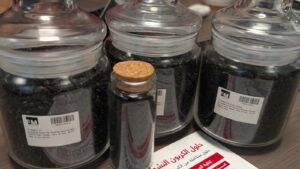
 November 23, 2026

What decides the price of activated carbon: raw material, grade, form, mesh size, impregnation, quantity, packaging, testing and freight. How to compare quotes and get an accurate one.
November 10, 2026
Carbon-in-leach (CIL) and carbon-in-pulp (CIP) are the two most widely used ways to recover gold from cyanide leach slurry. Both use activated carbon to adsorb dissolved gold, and both feed the same elution and regeneration steps. The difference is where and when the carbon meets the pulp, and that choice affects plant size, recovery and […]
November 3, 2026
Reverse osmosis (RO) membranes are the most expensive part of most water purification and desalination systems, and they are easily damaged. An activated carbon filter in front of the RO is one of the simplest ways to protect them. This guide explains why, where the carbon goes and how to choose and run it. Why […]


FM Support
Hi, Thanks for visiting us.
We shall assist you in fulfilling your requirement.